
Nikro Air Duct Cleaning in Kensington: A Homeowner’s Guide
Two quotes land in your inbox. One says $99. The other says $400. Same house, same number of vents, wildly different numbers. The gap almost always comes down to equipment: whether the contractor brings a machine that pulls the whole system into a contained negative-pressure state, or a shop vacuum that shuffles dust from the supply side to the return and calls it clean. Nikro is one of the names behind the first kind. Here’s what the equipment actually does, and what to ask before anyone touches your ducts.
What Does Negative-Pressure Duct Cleaning Actually Mean?
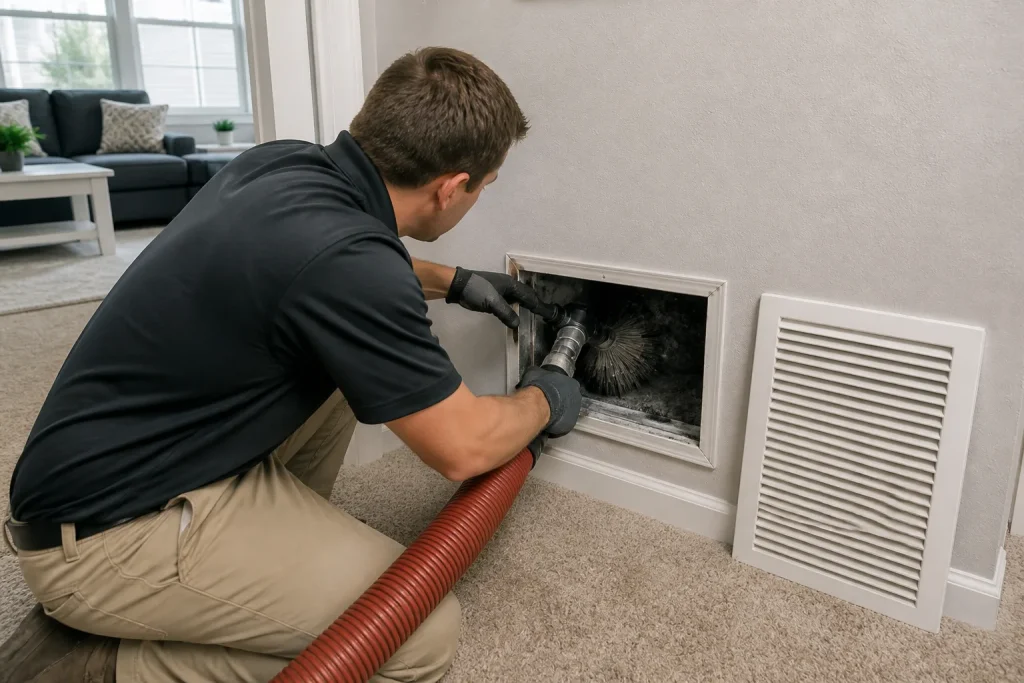
Negative-pressure cleaning means the extraction unit pulls air out of the duct system faster than anything is being pushed in, so the whole network stays under suction while it’s being cleaned. Mechanically, the machine connects to the main trunk or a designated access point and draws a high volume of air toward its filters. Every brush, whip or air tool working downstream is dislodging debris into a current that’s already moving away from your living space. That’s the whole principle. Containment first, agitation second.
Why does it matter so much? Because the alternative is worse than doing nothing. A vacuum that doesn’t create real suction at the far ends of the system, or a blower aimed into a register, just relocates contamination. Dust that settles on the supply-side surfaces gets pushed through the same paths your conditioned air travels. You haven’t cleaned the system; you’ve redistributed it. In a Kensington home with a finished basement and a long trunk run, that difference is easy to feel. Allergy symptoms don’t improve, and sometimes they get worse for a week.
At Kensington Air Duct Cleaning, we run professional-grade Rotobrush and Nikro systems for exactly this reason. These are the same class of machines certified HVAC contractors use, not consumer equipment dressed up with a branded hose. If you want the deeper walkthrough of how a full cleaning is scoped, our air duct cleaning page covers it step by step.
The Nikro Tool Lineup, and What Each One Is Built to Dislodge
Nikro is a manufacturer of duct cleaning equipment, and the reason contractors talk about it is range: the same brand covers the big extraction unit and the small tools that reach into the duct. Here’s what actually shows up on a job and what each tool is for.
- Portable negative-pressure units. The standard for residential work. A self-contained machine with HEPA filtration that connects to the duct and creates suction. Truck-mounted units are the larger analog, but the portable version is what most homes get, and it’s plenty when it’s set up properly.
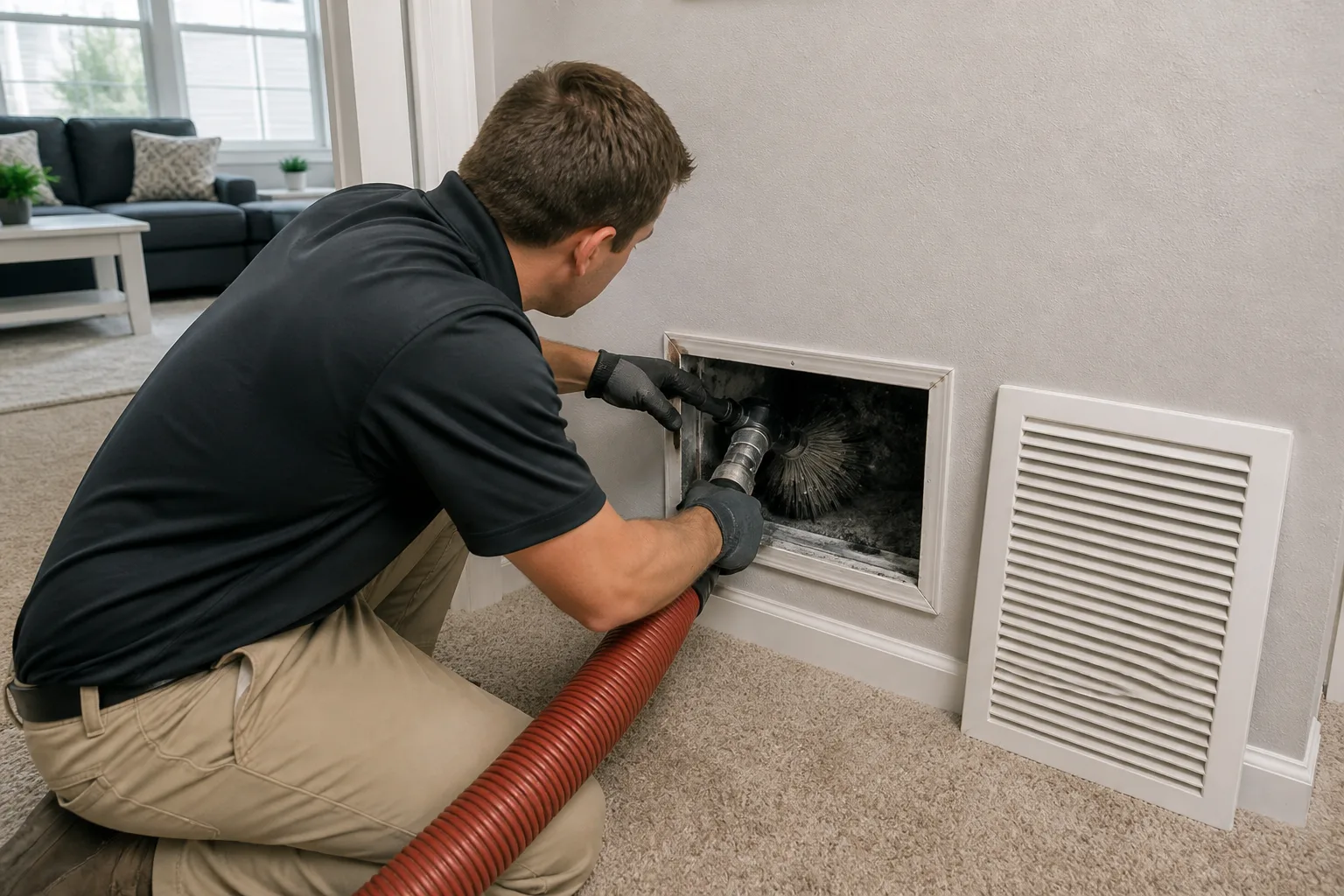
- Rotary brush systems. Flexible shafts with brush heads that spin against the duct walls to break loose adhered dust, lint and debris. These work contact-by-contact down the length of a run.
- Compressed air whips. Forward-facing nozzles on a flexible line that blast air to push debris toward the extraction point. Effective on long, straight runs where a brush can’t reach every surface.
- Skipper balls. A weighted, rounded tool that travels through the duct bouncing off the walls, knocking loose material toward the vacuum. Useful in branches and turns where a directional tool stalls.
- Access and inspection tools. Cutting and sealing access points, plus cameras to see what’s actually inside before and after. The camera matters more than most homeowners realize.
The tools only work as a system. A whip without suction just moves dust. Suction without a brush leaves the stuck-on layer behind. When we clean a home in Kensington, the sequence is containment, then agitation, then extraction, run by run, so nothing gets loosened without somewhere to go.
Why HEPA Filtration on the Extraction Unit Matters
HEPA filtration captures fine particles that standard vacuum filters let pass back into the air. That’s the short answer. The longer answer is about what’s actually in the airstream leaving the machine.
A duct system holds dust, lint, pet dander, pollen, hair and construction debris. It also holds the very fine fraction: particles small enough to stay airborne for hours and small enough to reach deep into the lungs. A high-efficiency particulate air filter traps those instead of exhausting them back into the room where the machine is running. Without it, you get the odd situation of cleaning your ducts and fogging your living room with the contents of them.
This is where equipment choice gets serious. Nikro and Rotobrush extraction units are built to run HEPA filtration as part of the machine, not as an afterthought. For homes with heavier contamination, like a recent renovation’s drywall dust or a moisture problem that’s left more than dust behind, we bring Abatement Technologies equipment into the mix. Containment and HEPA-level extraction are what that gear is for. Higher-contamination jobs need more than a routine cleaning setup, and it’s worth saying plainly rather than discovering halfway through the job.
How Do You Verify a Contractor Is Actually Using This Equipment?
You verify by watching what comes through the door and asking specific questions before the work starts. Most homeowners don’t know what to look for, which is exactly why the low bid survives. Here’s a practical checklist.
- Ask what machine they’ll use, by name. A contractor who runs Nikro or Rotobrush will tell you without hesitation. A vague answer (“we use professional equipment”) is a warning sign.
- Look for a machine that connects to the duct. The extraction unit should be physically attached to the system, not hovering near a register with a hose draped over it.
- Ask where the access points will be cut. A proper cleaning needs access to the trunk and major branches. Sealing those afterward is part of the job.
- Watch for containment. Register covers, plastic sheeting and a machine running suction throughout are signs of a real process. No containment means dust in your house.
- Request before-and-after photos of your own ducts. A camera inspection shows what was there and what’s left. That’s the proof that matters, not a checklist handed to you at the door.
Our technicians have up to 12 years of experience, and the question we hear most is some version of “how do I know this was done right?” A camera and a photo record are the honest answer. Ask for both.
What Nikro Equipment Can’t Fix on Its Own
Cleaning removes what’s inside the duct. It doesn’t repair the duct. That’s the limit, and it matters more than most homeowners expect.
Leaky ductwork is a common finding in older Kensington homes, and it’s a re-contamination problem. Gaps at joints, disconnected runs and poorly sealed register boots pull air from unconditioned spaces into the system after you’ve cleaned it. You’ve just cleaned a duct that will refill through its own leaks. That’s the case for pairing cleaning with sealing: fix the pathway, then clean, or clean and seal in one visit. Cleaning alone treats the symptom.
Moisture is the other limit. If there’s active mold growth inside the duct, cleaning will remove visible growth from the surfaces it can reach, but without addressing the moisture source it returns. Mold is a moisture problem before it’s a duct problem. Our Kensington Air Duct Cleaning team handles duct repair and sealing as a natural extension of the cleaning, because we see the same leaks on the camera every time we look. And the indoor air system goes beyond the ducts. HVAC cleaning covers the coils and components that the ducts feed, and dryer vent cleaning handles the one duct in your home that’s a genuine fire risk if lint builds up in it.
When to Call a Pro
Call a professional when you notice a musty smell that returns after cleaning, visible dust puffing from registers when the system starts, or a recent renovation that sent drywall dust into the return. Those are signs the system needs more than a filter change. For homes that just want a scheduled cleaning, a professional assessment still beats guessing. Anything involving mold growth, gas appliances or electrical components near the ducting is not homeowner territory. Call a trained professional for those.
Related Services in Kensington
For the full indoor air system under one roof, see our Kensington Air Duct Cleaning overview. Beyond cleaning and sealing, we also work with Honeywell and Aprilaire filtration and purification products when a home needs an air quality upgrade that lasts past the cleaning visit.
The Bottom Line
Nikro equipment tells you the contractor is set up for real negative-pressure cleaning: containment, agitation with the right tool for each run, HEPA filtration on the extraction side. When a quote is dramatically cheaper, one of those pieces is usually missing. Ask what machine they’ll use, where they’ll cut access, and whether you’ll get before-and-after photos of your own ducts. Those three answers separate a cleaning from a dust shuffle.
If you’re in Kensington and need help, Kensington Air Duct Cleaning offers free estimates. Call (877) 792-6865. We answer 24/7. Fast dispatch from 7am to 7pm, Sunday through Friday.
Frequently Asked Questions
Yes. Nikro is one of the professional-grade equipment brands certified HVAC contractors use, alongside Rotobrush. It covers the full range: negative-pressure extraction units with HEPA filtration, rotary brushes, air whips and skippers. If a contractor names Nikro as their equipment, that’s a positive sign, though the setup and technique matter as much as the brand. Call (877) 792-6865 for an exact quote. Estimates are free.
You can’t get a reliable answer from a coupon number. The honest way to price a duct cleaning is per system, based on the size of the home, the number of runs and the condition found on inspection. A single flat price per system, agreed in writing before work starts, is the standard to hold a contractor to. Per-vent pricing is how a low quote becomes a large invoice. Call (877) 792-6865 for an exact quote. Estimates are free.
Because the equipment or the scope is smaller. A quote that doesn’t include a negative-pressure machine with HEPA filtration, proper access points and a camera inspection is a different service wearing the same name. Ask what’s included before you compare numbers. Call (877) 792-6865 for an exact quote. Estimates are free.
Ask for before-and-after photos of your own ducts and a camera check of the runs that were cleaned. A contractor using proper equipment will show you the access points, the containment and the result. If you didn’t see it, assume it wasn’t verified. Call (877) 792-6865 for an exact quote. Estimates are free.
There’s no universal schedule. Homes with pets, allergy sufferers, recent renovations or a system that’s never been serviced tend to benefit sooner; a clean home with good filtration may go much longer between cleanings. A camera inspection tells you what condition your system is actually in, which beats a fixed interval. Call (877) 792-6865 for an exact quote. Estimates are free.
Written by the team at Kensington Air Duct Cleaning.
Need Air Duct Cleaning Help?
Call Kensington Air Duct Cleaning - the local pro we connect you with is licensed and insured, with free written estimates in Kensington.
(877) 792-6865