
Last updated November 22, 2026
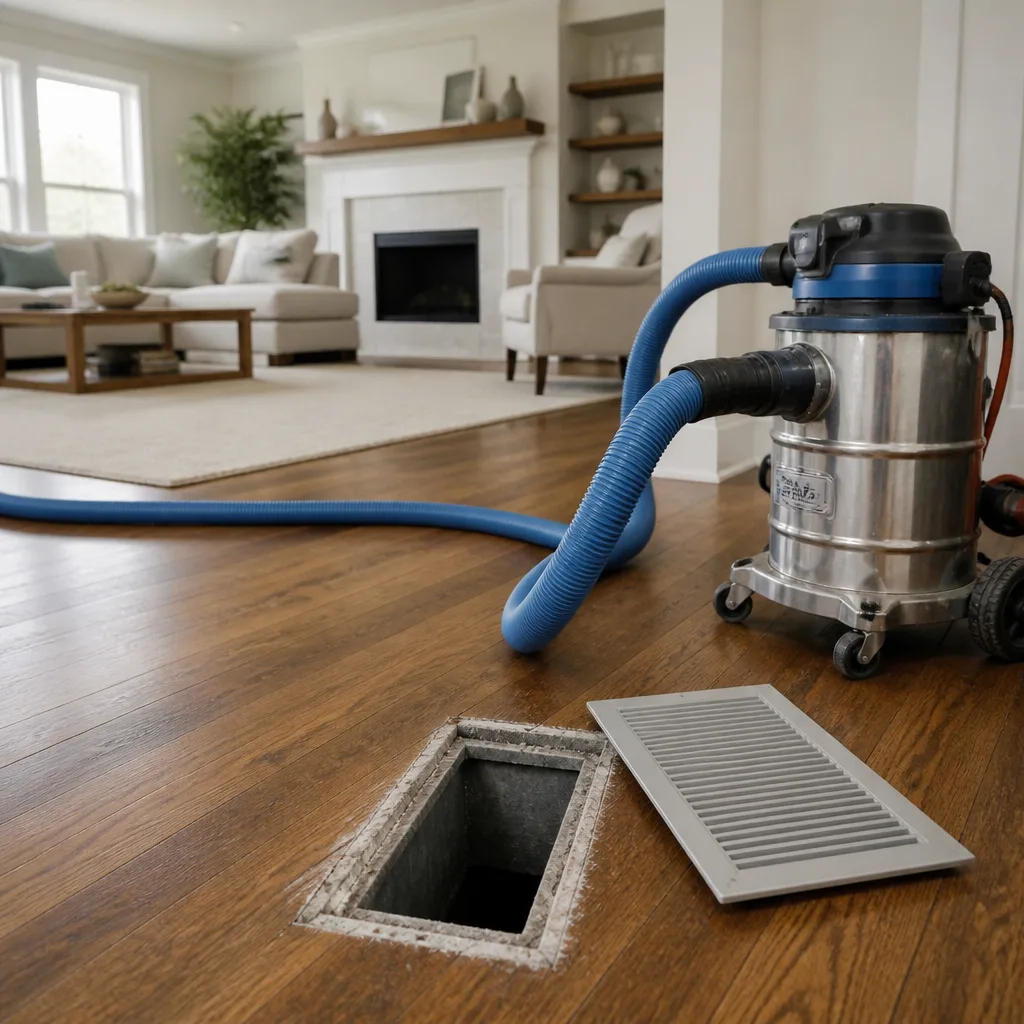 Whole-home duct cleaning
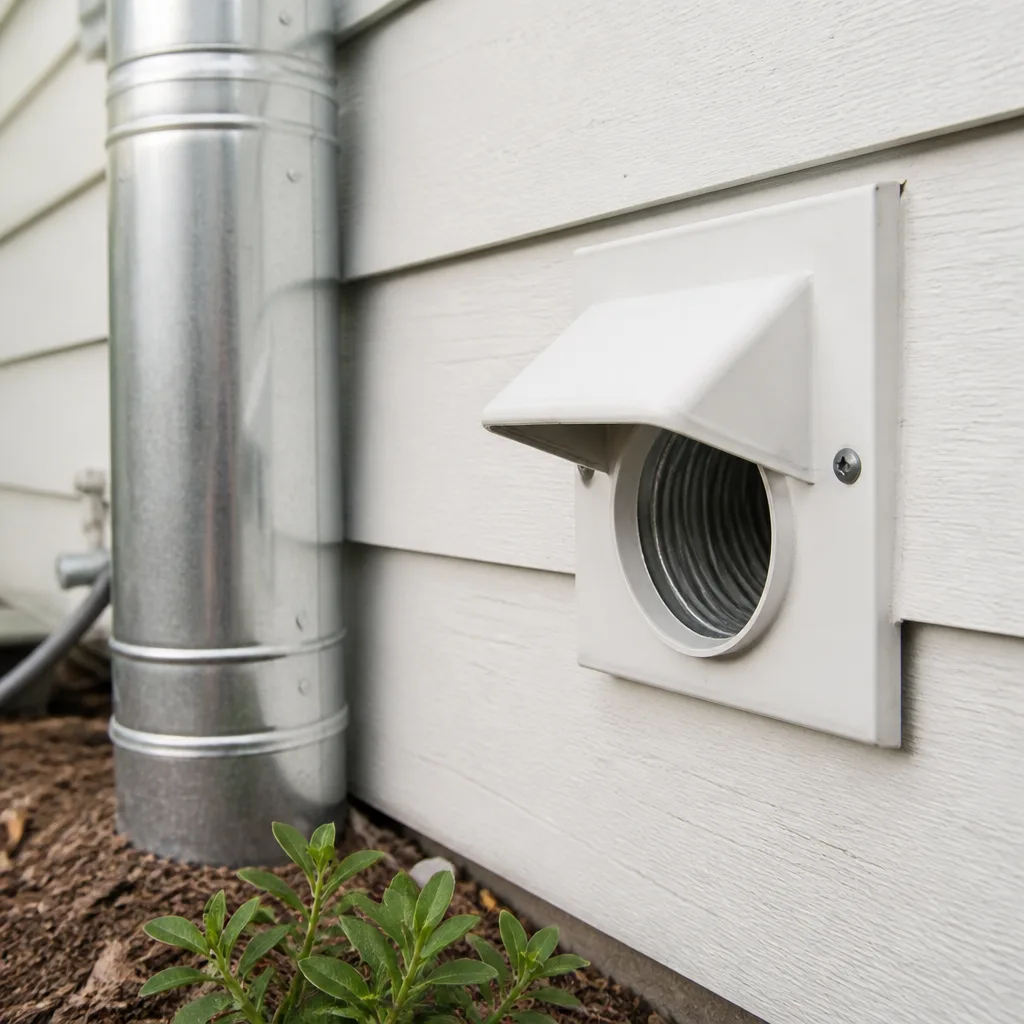 Dryer vent cleaning
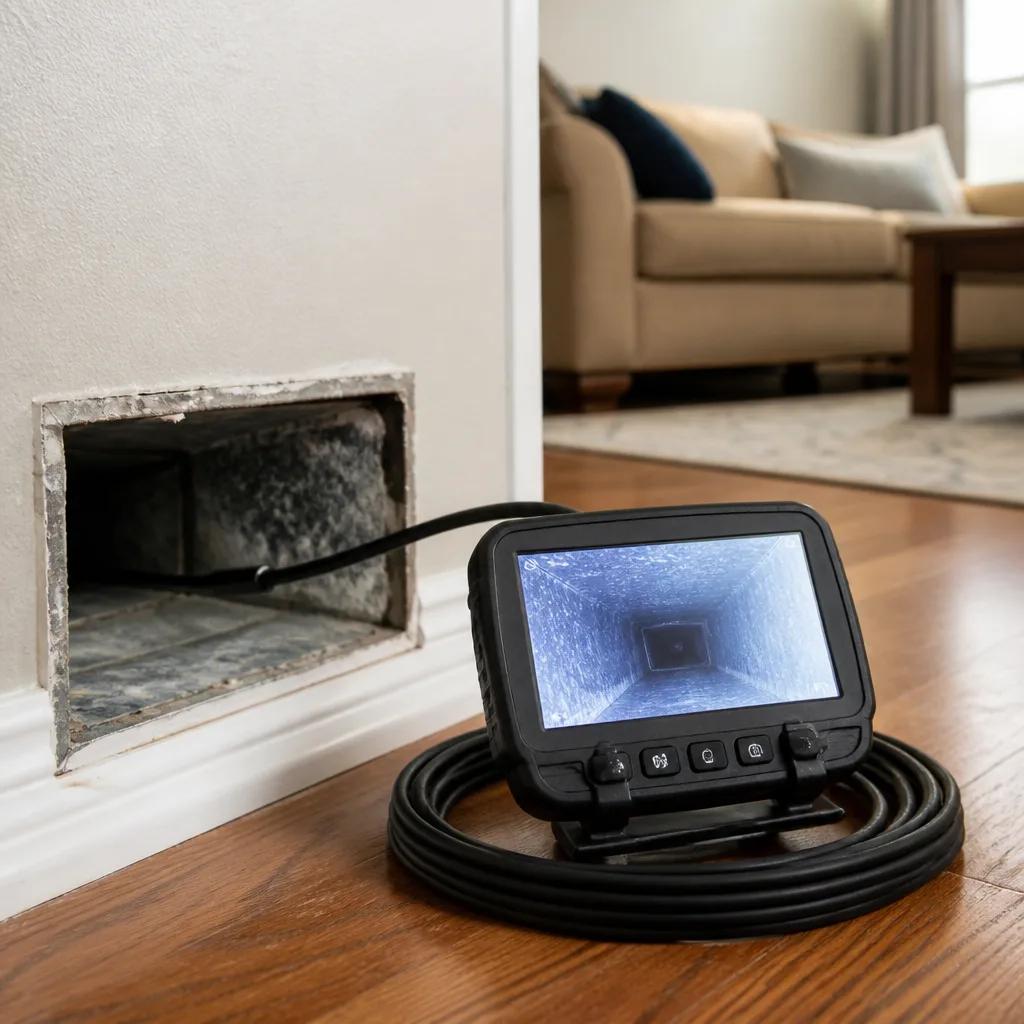 Camera inspection
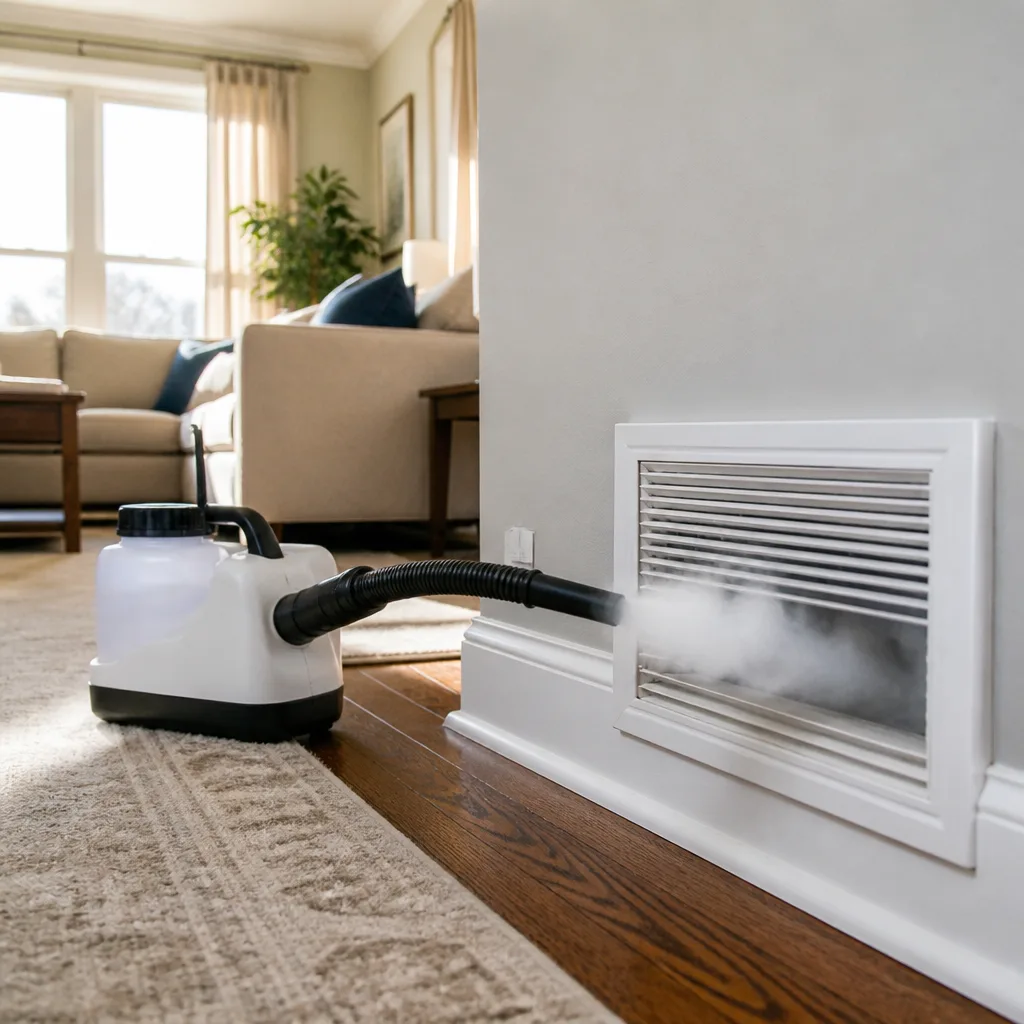 Sanitizing & deodorizing
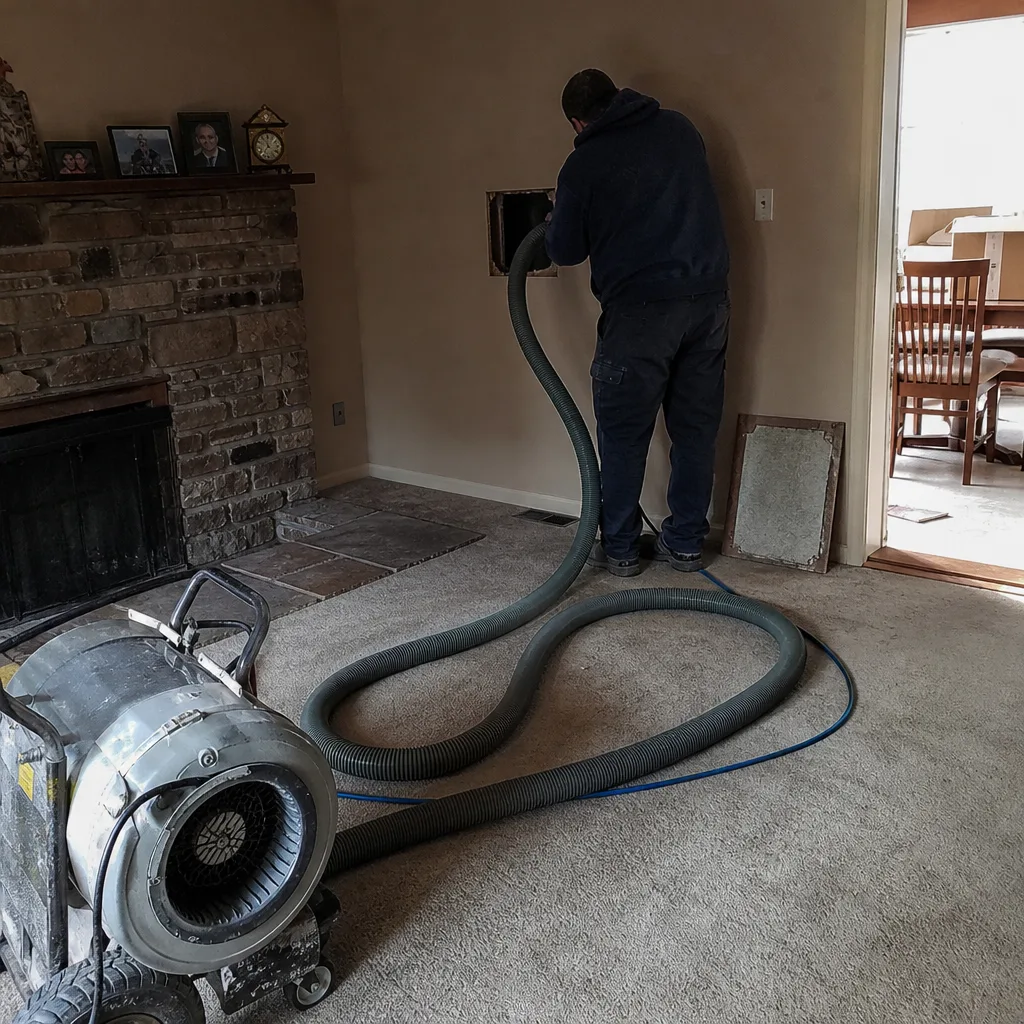
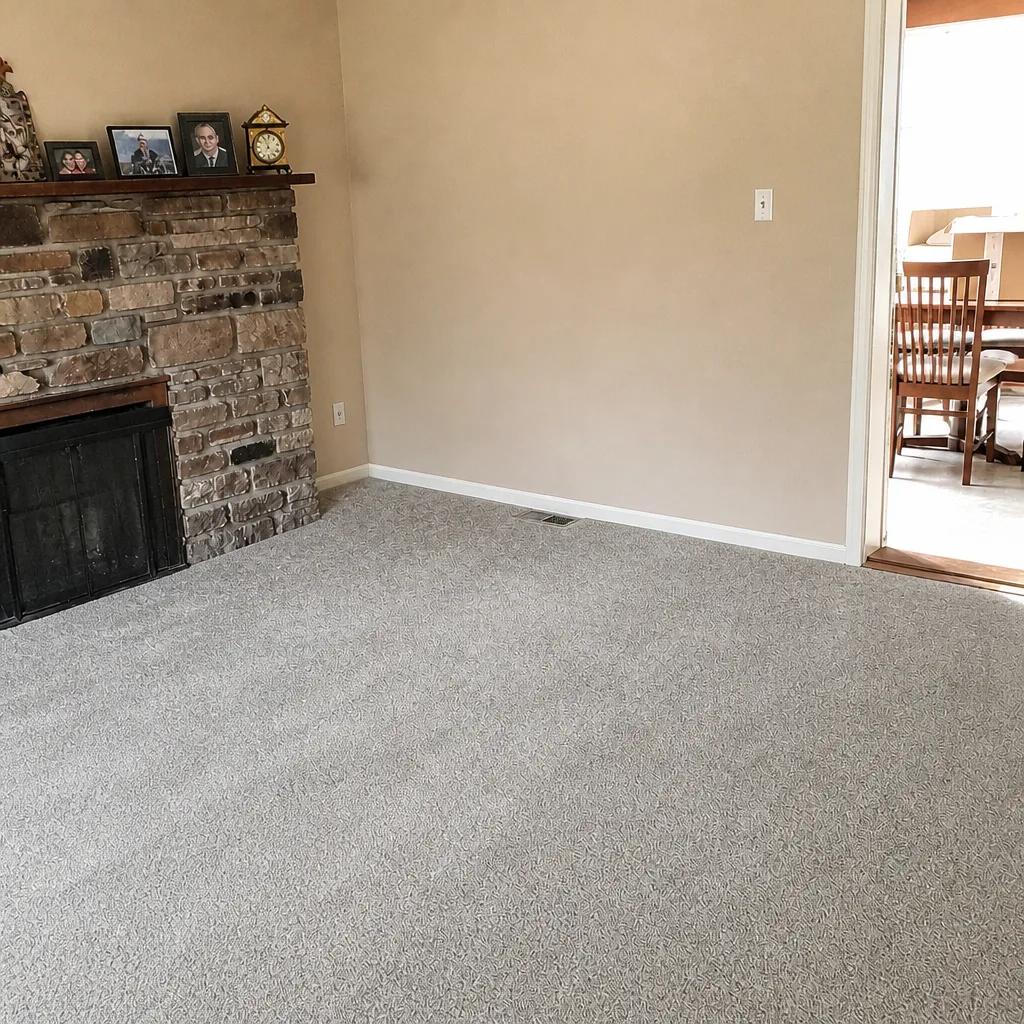
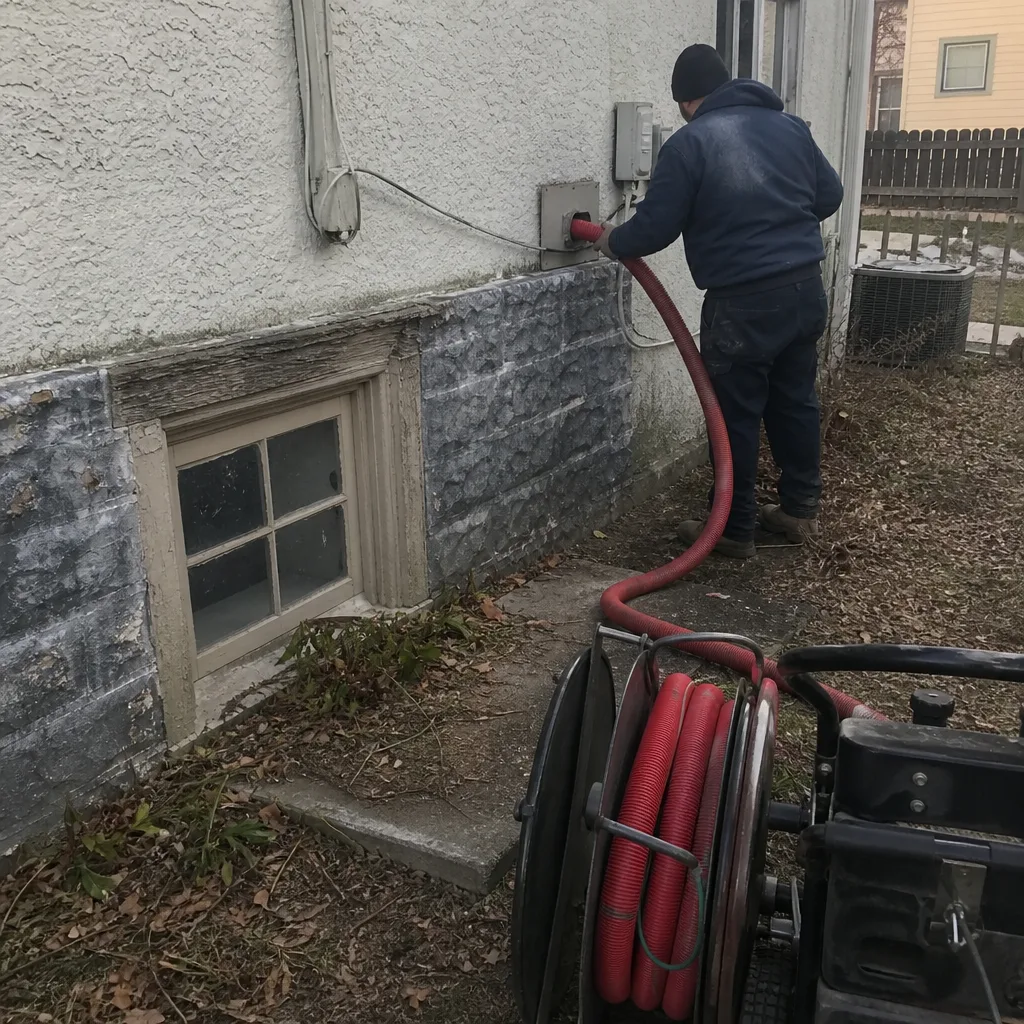
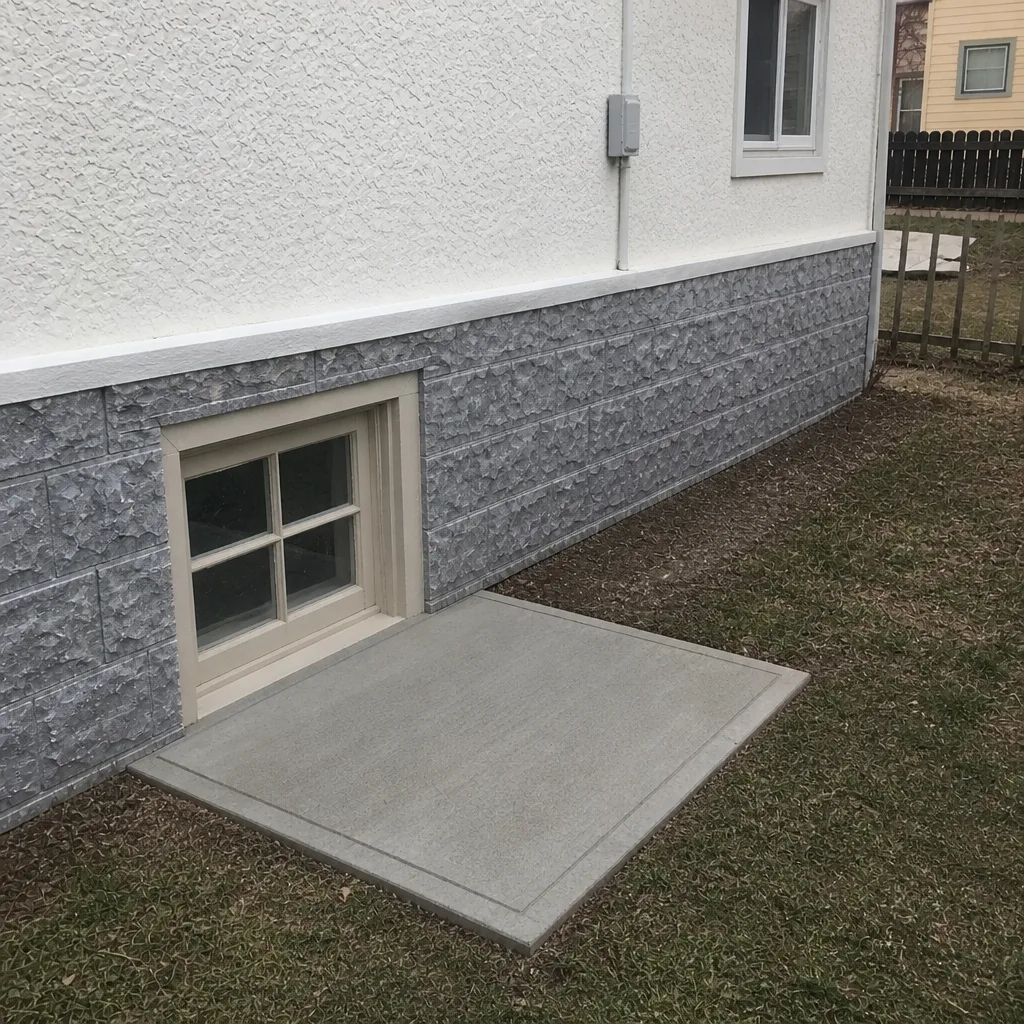
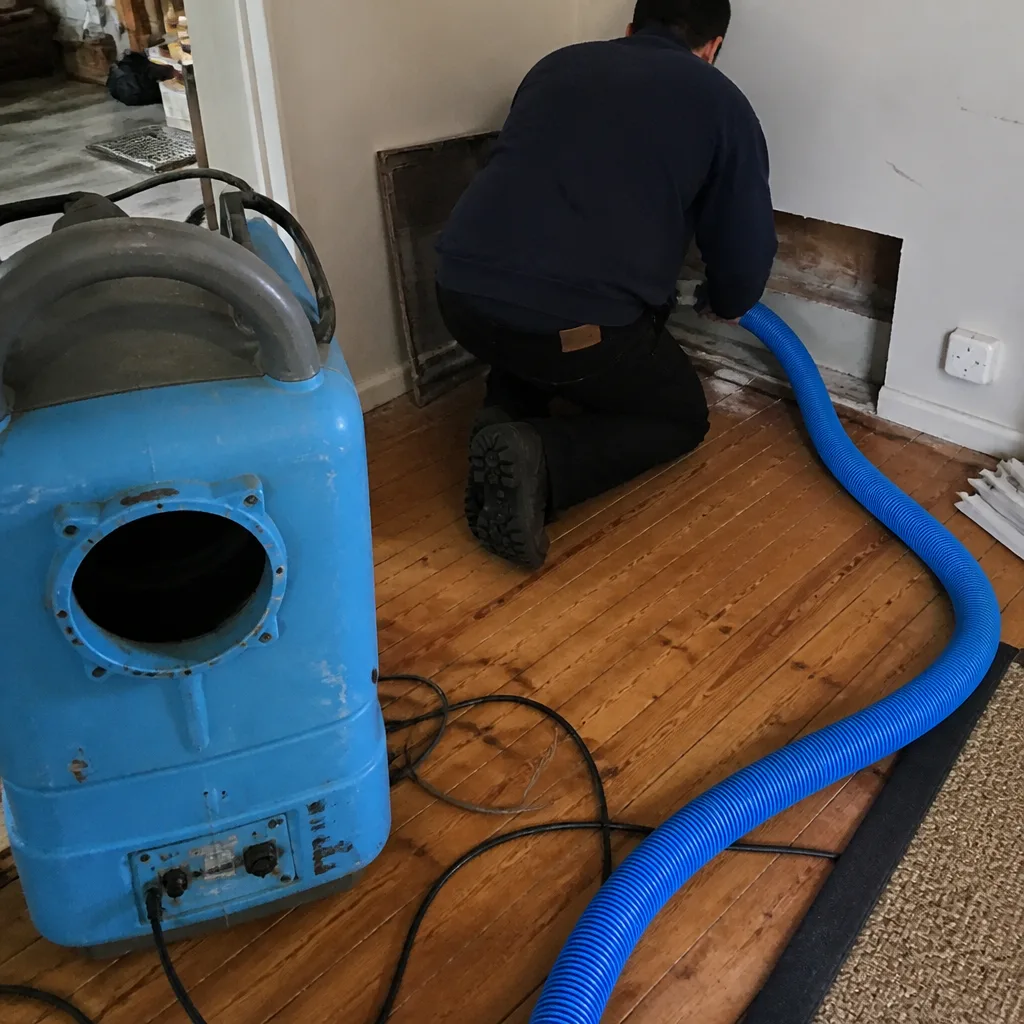
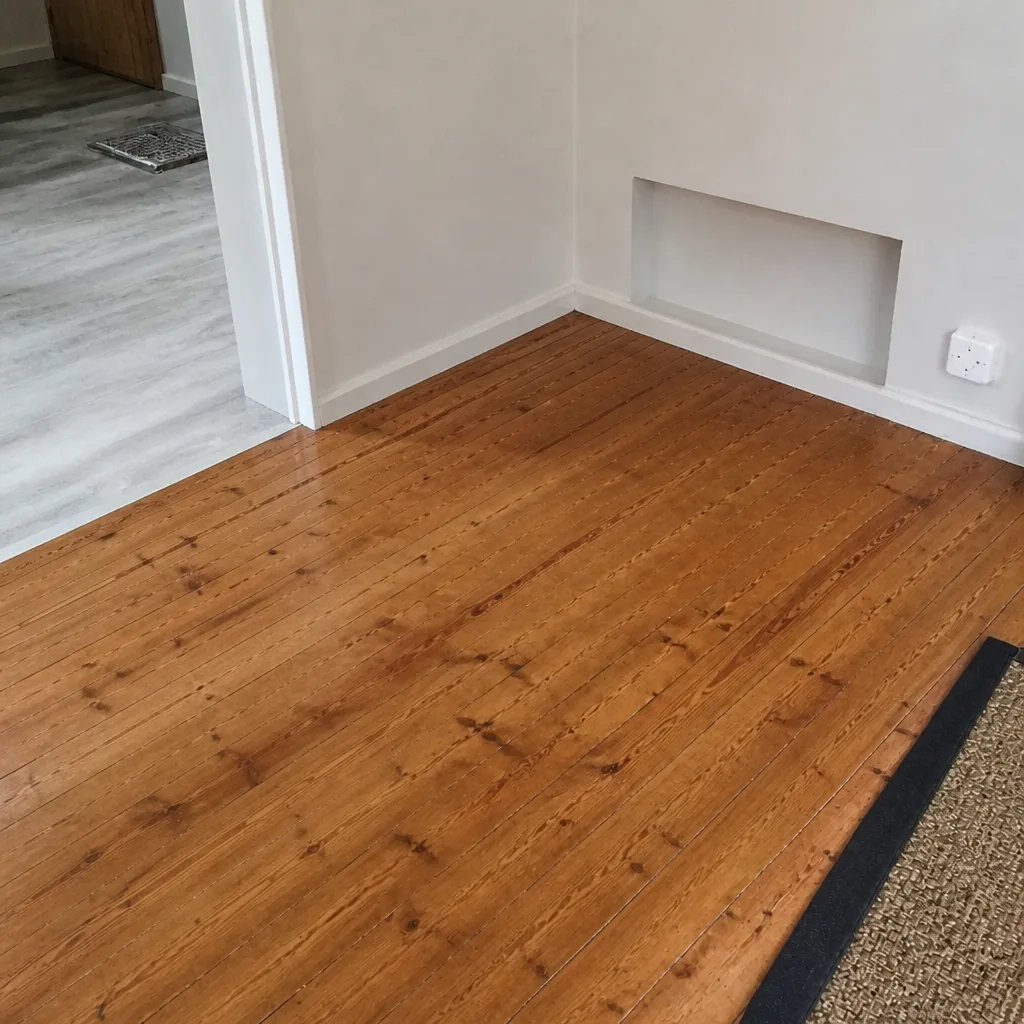
Whole-system duct and dryer vent check with before-and-after photos - you see exactly what came out of your vents
That "$99 whole-house special" is a bait ad - the real number appears once they are in your hallway, or the "clean" is a shop-vac at the register. We photograph the inside of your ducts before and after instead.
Air Duct Cleaning Warning Signs: A Kensington Homeowner’s Reference Guide
By the time you can smell your ducts, the contamination has already been circulating for weeks. That’s the part most checklists get wrong. A musty odor or a puff of dust at a register is a late signal, the point where buildup is heavy enough to announce itself. The warning signs that actually matter come earlier, and they’re quieter: a bedroom that never warms up quite like the hallway, a filter that loads faster than it used to, a pattern of sneezing that tracks with one part of the house. This guide walks through those early indicators one by one, explains what each one points to inside the system, and shows you where a professional inspection fits. Kensington Air Duct Cleaning works on the full airflow system, not just the vents, and that’s the lens we’ll use throughout.
Quick Answer
The earliest warning signs of a duct problem in a Kensington home are usually differential airflow between rooms, uneven heating and cooling that shifts over time, a filter that clogs faster than it used to, allergy symptoms that cluster in specific rooms, and staining or moisture at register edges. Visible dust and musty smells are late-stage signals, not early ones. If two or more of these show up together, it’s worth having the system inspected before the problem reaches your air.
Styles & brands we work with
- Whole-home duct cleaning
- Dryer vent cleaning
- Camera inspection
- Sanitizing & deodorizing
Table of Contents
- Differential Airflow Between Rooms: The First Warning Sign
- What Uneven Heating and Cooling Tells You
- Filter Loading Rate as a Diagnostic Signal
- Allergy Symptom Patterns and What They Reveal
- Visual Cues at Registers That Go Beyond Dust
- Duct Separation, Leaks, and the Cost of Ignoring Them
- After a Renovation: Construction Dust in the System
- How a Professional Inspection Actually Works
Differential Airflow Between Rooms: The First Warning Sign
The single most useful early indicator is air volume. Not dust, not smell, but whether each room gets the airflow it should. When you hold a hand up to a supply register in the living room and then one in a back bedroom, the difference should be small. If the back bedroom barely pushes air while the front of the house feels like a wind tunnel, something in the system is changing the balance, and it’s usually one of three things: an obstruction in the branch serving that room, buildup narrowing a section of duct, or a separation where a run has come loose from its trunk connection.
Obstruction is the most common of the three. A branch line can be partly blocked by debris that accumulated over time, by a damper that was never fully reopened after a prior service, or by a collapsed section of flexible duct. Buildup narrows a duct the way sediment narrows a pipe: gradually enough that you don’t notice the change week to week, but the room stays a little cool or a little stuffy for reasons you can’t pin down.
A separation is a different problem and worth flagging separately because it doesn’t just starve one room. When a run detaches from the trunk, the air it was carrying spills into the framing cavity instead. The room loses airflow, and whatever is in that cavity, insulation fibers included, can get pulled into the airstream. That is exactly the kind of thing Duct Repair & Sealing is designed to fix, and it’s why we approach duct work as a system rather than a per-vent cleaning job.
Here’s a simple way to start narrowing it down:
- Pick a calm day with the system running on its usual setting.
- Hold your hand or a strip of tissue near each supply register and note which ones feel strong and which feel weak.
- Check whether the weak ones are all on one side of the house or at the end of the longest runs. That pattern points to the trunk or a main branch rather than a single register.
- Confirm the obvious: registers aren’t blocked by furniture, curtains, or rugs, and the filter isn’t loading.
- If the imbalance persists, note the rooms involved and have the system inspected. A technician can trace airflow to the source instead of guessing.
What Uneven Heating and Cooling Tells You
Hot and cold spots are so common in Pennsylvania homes that most people accept them as a fact of life. They aren’t. The pattern of unevenness matters, because it tells you which part of the system is compromised.
- One room is always off, the rest are fine. This points to a single branch: a restriction, a blocked or partly closed damper, or a loose run serving that room.
- One side of the house is off, the other is fine. This points to a trunk or a main branch that the rooms on that side all share. Buildup or a leak somewhere along that trunk is the usual cause.
- The far end of the house is always warmer in summer and cooler in winter. Long runs lose the most conditioned air to leakage. If the farthest rooms are consistently the worst, leakage along the run is a likely contributor.
- Upstairs is off, downstairs is fine. A system that was sized for a different layout, or upstairs ducts that were altered at some point, will show this pattern. It’s worth tracing before assuming the equipment is the problem.
The key detail in Kensington homes is that unevenness that appears is different from unevenness that was always there. A house that heated evenly five winters ago and doesn’t anymore has a change in the system, not a design flaw. That shift is the signal. Changes that drift slowly are the easiest to ignore and the ones worth catching earliest.
Filter loading gets to the heart of this. A filter that used to last six or eight weeks and now needs changing every month is pulling far more particulate out of the air than it used to. Something upstream has changed, and it’s worth asking what.
Filter Loading Rate as a Diagnostic Signal
Your filter is the best instrument the system has, and most homeowners read it backward. The filter isn’t the problem when it clogs fast. It’s doing its job and telling you something upstream is sending more debris its way. A filter that loads faster than it used to is a diagnostic signal, and the timing of the change helps narrow the cause.
- Loading changed after a renovation, drywall repair, or flooring work. Construction dust is fine, heavy, and gets everywhere. It finds its way into return ducts and clogs filters fast. That’s the signature we look for after any major project.
- Loading changed after moving in. The previous occupant may have never had the system serviced, or the ducts may have accumulated debris over years of use. A new-to-you home is worth a full inspection.
- Loading changed with a new pet or more shedding. Pet dander behaves differently from dust and tends to be sticky. It coats duct walls rather than falling out of the air.
- Loading changed with no obvious cause. This is the case to take seriously. It could be a duct separation pulling insulation or cavity dust into the airstream, or a return that has come loose in an unconditioned space. Either is worth a look.
We stock a range of filtration options from Honeywell and Guardsman, and we tend to recommend the right filter for the home rather than the highest-rated one. A high-MERV filter on a system that wasn’t designed for it can strain the blower and make the airflow problem worse. Filter choice and duct health work together, and evaluating them together tends to reveal what’s actually going on. Professional-grade extraction with a system like Rotobrush or Nikro also removes the source of filter loading rather than just replacing the filter that catches it.
Allergy Symptom Patterns and What They Reveal
Symptom patterns are one of the more underrated duct diagnostics, and not because a house causes allergies. It’s because the pattern of when and where symptoms show up tells you what kind of contamination is in the system. Three patterns matter most.
Pet dander. Symptoms that concentrate when you’re near carpeted rooms, upholstered furniture, or soft surfaces, and that ease when you leave the room for a while, often track with dander. Dander saturates carpets and settles into ductwork over time. A new pet in a home that never had one is a common trigger, but so is an older home where the previous owner had pets.
Mold spores. Symptoms that worsen when the system runs or right after it kicks on, and that correlate with humidity or damp seasons, can point to mold spores being circulated. Mold in ducts doesn’t require a visible leak. Condensation on cold duct surfaces in summer, or a return duct running through a humid attic or crawlspace, can be enough to support it. If that pattern is present, our air quality and sanitizing work is designed to address it at the source, and Abatement Technologies containment equipment gives us the extraction capability that higher-contamination situations call for.
Construction dust. Symptoms that appear after a renovation, or a gritty feeling, often with a fine grey dust film on horizontal surfaces, are classic for construction dust. Drywall dust is extremely fine and lingers. It can take much longer than the project itself to clear out of a duct system, and it doesn’t settle evenly.
None of this diagnoses an allergy. It’s correlation, not medicine. But a pattern that’s room-specific, or that changes with the season or the system, is worth taking to a professional for a duct inspection as the next step, alongside whatever your doctor advises.
Visual Cues at Registers That Go Beyond Dust
Most guides stop at “visible dust at the registers.” That’s a surface read, and by the time dust is visible there, the system is usually well past the early phase. The register tells you more if you know what to look for:
- Dark staining at the edges of the register. A shadow ring around the frame, where the wall meets the grille, is a common sign of air leaking around the register boot rather than through it. If it’s pulling air out of the wall cavity, it’s pulling in whatever is in there too.
- Oil streaking. Smudges or streaks that look slightly greasy rather than dry dust are often from airborne oils, cooking vapor in particular. If they concentrate near the kitchen, that points to a return side that’s pulling kitchen air into the system. If they’re more widespread, the source may be upstream.
- Moisture rings. A water mark or ring on the wall or ceiling around a register, or rust on the register face, is the signal to act on right away. Moisture in the wrong place is the condition mold needs. Get it checked quickly rather than waiting.
- Fine grey or white dust film. Grey dust suggests ordinary accumulation. Fine white dust can mean drywall material. Look at recent renovation activity before drawing conclusions.
- Dark deposits in the grille slots themselves. A dark film inside the slots of the register, rather than the surface of the frame, is often a sign of buildup inside the ductwork itself, not just the register face.
Registers are a window into the system, not the system itself. Cleaning the grille faces without cleaning the ductwork behind them is a gesture, not a fix. That’s why our approach with a professional system like Nikro or Rotobrush is to address the full run, not just what you can see or reach from inside the room.
Duct Separation, Leaks, and the Cost of Ignoring Them
Leaky ducts are the quietest of the warning signs, because they don’t always show up as a symptom you notice. What they do is cost you three ways at once: the conditioned air you paid to heat or cool is spilling into the attic, basement, or framing cavity instead of the room; the system runs longer to reach the same temperature; and the leak can pull in dust and insulation fibers from the very spaces it’s spilling into. A duct that’s separated at the boot, at a junction, or along a run of flexible duct is typically the culprit, and it gets worse with heat cycling in Pennsylvania summers and winters.
What to check, without opening anything up:
- Note the rooms that feel the most uneven. Their runs are the first candidates for inspection.
- Look for soot, dust streaks, or insulation fibers around the seams of any visible duct in an unfinished basement, garage, or attic.
- Check the register boots where they meet the wall or ceiling. A visible gap or a face that’s pulling away is a reliable sign of a boot sealing problem.
- Listen for whistle or hiss near registers. It can indicate a leak that’s pulling air through a narrow gap.
- Have the system inspected by someone equipped to repair as well as clean. Cleaning a leaking system won’t stop it re-contaminating.
Duct Repair & Sealing is a natural extension of a thorough cleaning: a technician finds the leaks, seals them, and the cleaning stays effective because the system no longer pulls contamination back in. On the repair side, some problems found during cleaning are worth flagging to the homeowner for a specialist. Gas lines and electrical connections near the air handler are not a homeowner project, and neither is panel work. If a technician finds anything in that territory, the right move is a licensed professional in that trade, not a quick fix.
After a Renovation: Construction Dust in the System
Renovations are the most common trigger for the early warning signs in this guide. Drywall, sanding, and flooring work generate an enormous amount of fine particulate, some of which finds its way into return ducts however carefully you seal a room. The signs typically show up within weeks of the project finishing: filters loading faster, fine grey dust on horizontal surfaces, and sometimes an uptick in allergy-type symptoms.
A few practices save a lot of trouble on the next project:
- Ask the contractor to seal returns and supply registers in work areas with plastic and tape before demolition starts.
- Run a HEPA air scrubber in the work zone if the scope is significant.
- Change the filter the day the project wraps, then check it again at the usual interval. If it loads at double the usual rate, have the system looked at.
- Have a professional duct inspection after any project that involved cutting into walls, ceilings, or flooring. Visible dust in the rooms is a signal; the dust behind the register is what you need to check.
Construction dust and fine particulates are where our Abatement Technologies equipment earns its place. Routine dust buildup can be handled with a standard system, but post-renovation cleanup means fine debris under everything. Containment and HEPA-level extraction are what keep it from migrating through the house while it’s being removed.
How a Professional Inspection Actually Works
The inspection tells you whether the warning signs are real, and if so, what kind of problem you’re dealing with. A useful inspection follows a sensible order, and the results shape the recommendation.
- Walk-through and conversation. The technician asks about the symptoms: which rooms, how long, what changed, recent projects, pets, past service. The history usually points at the cause before the inspection does.
- Airflow check at registers. The technician measures supply airflow at each register, which confirms which runs are restricted and helps separate a single-branch problem from a trunk problem.
- Visual inspection of accessible ductwork. Inside the runs, at the air handler, at the boots, and along any duct visible in the basement or attic. This is where separations show up.
- Filter and equipment check. Filter loading rate, filter fit, static pressure, and blower condition. A high-MERV filter on a system that can’t handle it is worth catching here.
- Recommendation. Air duct cleaning, Duct Repair & Sealing, an air quality upgrade, or a combination, depending on what’s found. The full system, not just the vents.
We use professional-grade equipment throughout: Rotobrush and Nikro for cleaning the full run, Abatement Technologies in higher-contamination situations, and Honeywell and Aprilaire product capability for filtration and air quality upgrades that extend the value of a cleaning. Our technicians have up to 12 years of experience, and the work is documented with before-and-after photos of the system so you can see for yourself what changed.
Common Mistakes to Avoid
- Waiting for a smell before acting. The smell is a late signal. Two or three of the earlier signs together, like uneven airflow plus a fast-loading filter, are worth acting on well before that.
- Treating visible dust at registers as the whole job. Cleaning the face of a register and the reachable inch of duct behind it is cosmetic. The contamination that affects airflow and air quality is in the run.
- Replacing filters more often without asking why. A filter that loads faster is telling you something changed upstream. Changing it more often without a look at the system leaves the cause in place.
- Cleaning a leaking system. If a duct is separated, cleaning alone won’t hold. The cleaning is undone by the leak pulling contamination back in. Repair and sealing belong in the same visit.
- Assuming a high-MERV filter is always better. A filter that’s too restrictive for the blower strains the system and worsens airflow. Matching the filter to the system matters more than the rating on the box.
- Skipping the dryer vent. Dryer vent cleaning is separate from the HVAC system, but it’s the same category of hidden buildup. The lint in a dryer vent is a fire-hazard concern and worth checking on its own timeline.
- Accepting a quote without a documented recommendation. Ask what the inspection found, what the plan is, and how the work will be documented. A thorough recommendation is specific, not a flat price per vent.
See the difference
 Before
 After
 Before
 After
 Before
 After
When to Call a Professional
Call when two or more of the early warning signs show up together, when the unevenness appeared rather than being present from day one, or when a filter is loading noticeably faster than it used to. Call after any significant renovation that involved cutting into walls or ceilings. Call if you find a moisture ring or rust around a register, because moisture needs looking at quickly. And call if you’ve moved into a home and don’t know whether the ducts have ever been serviced. Kensington Air Duct Cleaning offers free estimates in Kensington, so there’s no cost to get an honest read on what your system needs. Our technicians have up to 12 years of experience and can walk through the whole system with you. Call (877) 792-6865 to book an inspection or ask a question.
Frequently Asked Questions
The earliest reliable sign is a change in airflow to one or more rooms, before any dust or odor shows up. If a room that used to heat and cool evenly now feels noticeably weaker, or one register pushes less air than it used to, start there. Hold your hand near each register on a calm day and compare. Call (877) 792-6865 for a free estimate if the pattern is there.
Pricing is set per job by the written estimate, based on the size and layout of the system and what the inspection finds, and the estimate is free. That’s deliberate: a flat price per vent tends to reward a fast surface pass rather than a thorough job. Ask for a written estimate before any work starts. Call (877) 792-6865 for a free estimate.
Cheap quotes usually price per vent and do the minimum: a quick vacuum at each register without cleaning the full run. It looks like a thorough job from the room, but the buildup, the leaks, and the separations are still in the system. The written estimate should say exactly what’s included and what documentation you’ll get. Call (877) 792-6865 for a written estimate and a clear plan.
Ask for before-and-after photos of your own system, inside the ducts, taken during the work. That’s the most direct way to see what changed. Ask also for the scope in writing, including which ducts were cleaned and what repairs were made. We build that documentation into the work, because the whole job happens where you can’t see it. Call (877) 792-6865 to talk through a documented estimate.
There’s no fixed schedule; the trigger is a change in the system, not the calendar. A home with pets, recent renovation, allergy symptoms, or never-serviced ducts tends to need it sooner than one with none of those. Watch the warning signs in this guide rather than going by years alone. Call (877) 792-6865 if you’re unsure.
Yes, and that’s usually the right order. Cleaning a leaking system without repairing the leak tends to leave the cleaning undone, because the leak keeps pulling contamination back in. We handle cleaning and Duct Repair & Sealing together so the result holds. Call (877) 792-6865 to talk through what your system needs.
The Bottom Line
The warning signs that matter in Kensington are the early, quiet ones: a room that’s lost airflow, uneven heating or cooling that appeared rather than being there from the start, a filter that loads faster than it used to, and an allergy pattern that tracks with a specific room or a specific source. Staining, moisture rings, and oil streaking at the registers round out the picture. The late signals, dust and odor, are what most lists describe, and by the time they show up, the problem is well established. If two or more of these signs are present, an inspection is the next step, and it should cover the whole system, not just the visible vents.
Get a Free Estimate in Kensington
Kensington Air Duct Cleaning works on air duct cleaning, dryer vent cleaning, HVAC cleaning, Duct Repair & Sealing, and Air Quality & Sanitizing across the full airflow system. Our technicians have up to 12 years of experience, we use professional-grade equipment, and we bring before-and-after photos so you can see the work. Estimates are free, and the price is set per job by the written estimate before any work starts. Call (877) 792-6865. We answer 24/7. Fast dispatch from 7am to 7pm, Sunday through Friday.
Written by the team at Kensington Air Duct Cleaning.